Natural stone patios in Teesside
A natural stone patio in Teesside costs £80 to £120 per square metre supplied and laid in 2026, covering Indian sandstone, limestone and yorkstone. The price includes excavation, a compacted sub-base, a full wet mortar bed and jointing, with the stone type and the thickness of the slab moving the figure most.
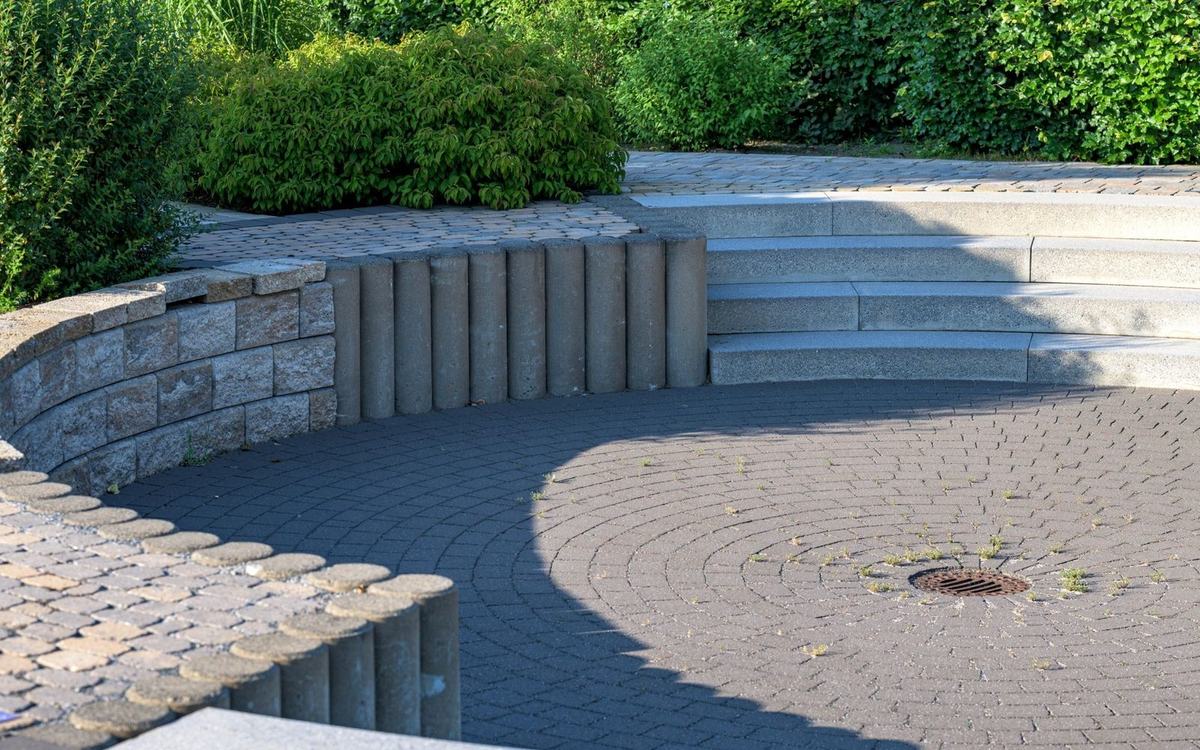
Stone that suits a Teesside garden
Natural stone is still the default choice for back gardens across the patch, and for good reason: the colour varies slab to slab, it weathers into the garden rather than out of it, and it sits comfortably against both the buff brick of the newer estates and the red brick of the older streets. Indian sandstone does most of the work here because the price is sensible and the riven surface grips underfoot in wet weather. Limestone gives a flatter, more uniform look in grey or blue. Yorkstone is the local heavyweight, expensive but unmistakable against a stone-built or period property.
What the price covers
- Digging out: excavation to depth and removal of the spoil, which on clay ground is heavy work and belongs in the price rather than in a surprise.
- The sub-base: compacted MOT type 1 to a stated depth, laid and whacked in layers so it cannot settle later.
- A full mortar bed: every slab bedded on a solid wet mix, with the backs primed on porous stone so the bond holds.
- Cutting: clean cuts around drains, manholes, downpipes and wall lines, made with a wet saw rather than a chipped edge.
- Jointing: pointed by hand or brushed in with a jointing compound, finished so water runs off rather than stands in the gaps.
What moves a stone patio up or down the range
Slab calibration is the quiet one. Hand-cut Indian sandstone arrives with a varying thickness, so each slab is bedded to level individually and the laying takes longer. Calibrated stone costs more per square metre but goes down faster. After that it is size and shape: a plain rectangle is cheap per metre, while a curved edge, a circle feature or a mixed-size random pattern adds cutting and setting-out time. Access matters too, and on Teesside it matters a lot, because a mid-terrace in Norton or Grove Hill means every tonne of stone and every barrow of muckaway travelling through a shared alley or the house itself.
Sealing, salt and the honest maintenance answer
Sandstone and limestone are porous, so they will darken with rain and pick up algae on the shaded north side of a house. That is normal, not a fault. Sealing slows staining and makes cleaning easier, though it needs redoing every few years and it is not a cure for a badly drained patio. Nearer the coast at Redcar, Marske and Saltburn the salt-laden air puts more of a load on soft stone, and a denser slab or porcelain often ages better there. A pressure washer used on full power will strip the joints out of any stone patio, so keep it wide, low and moving.
Getting a number that means something
Measure the area in metres, note anything in the way such as a manhole, a step down from a back door or a tree root, and say which look you are after. That is enough for a realistic quote, and the cost guide shows how those inputs turn into a price. If the choice between stone and porcelain is still open, the comparison guide lays out both sides plainly.