Patio repairs and repointing in Teesside
Patio repairs in Teesside start from around £150 for a small area of lifted or rocking slabs and repointing work. Fixing sunken corners, crumbled joints and standing water is usually a fraction of the cost of relaying, provided the sub-base underneath is still sound.
Repair or replace, honestly
The first question on any tired patio is whether the base is still doing its job. If a handful of slabs have dropped near a downpipe, a corner rocks underfoot or the joints have crumbled while the rest sits flat and drains away, that is a repair, and it is money well spent. If the surface has settled in waves across the whole area, water lies in several places after every shower, or slabs sound hollow wherever you tap them, the ground underneath has given up and patching it only buys a season. A quote should tell you which of those two you have, even when the answer is the cheaper one.
The repairs that come up most
- Sunken or rocking slabs: lifted, the bed made good, and relaid to the surrounding level so the trip hazard goes with them.
- Failed pointing: old mortar joints raked out and replaced, or a modern brush-in compound used where the joint widths suit it.
- Ponding and puddles: a local area relaid to a fall, or a channel added, so rain leaves the patio instead of sitting on it.
- Cracked and broken slabs: individual units swapped, with the practical warning that an exact colour match on a weathered patio is rarely possible.
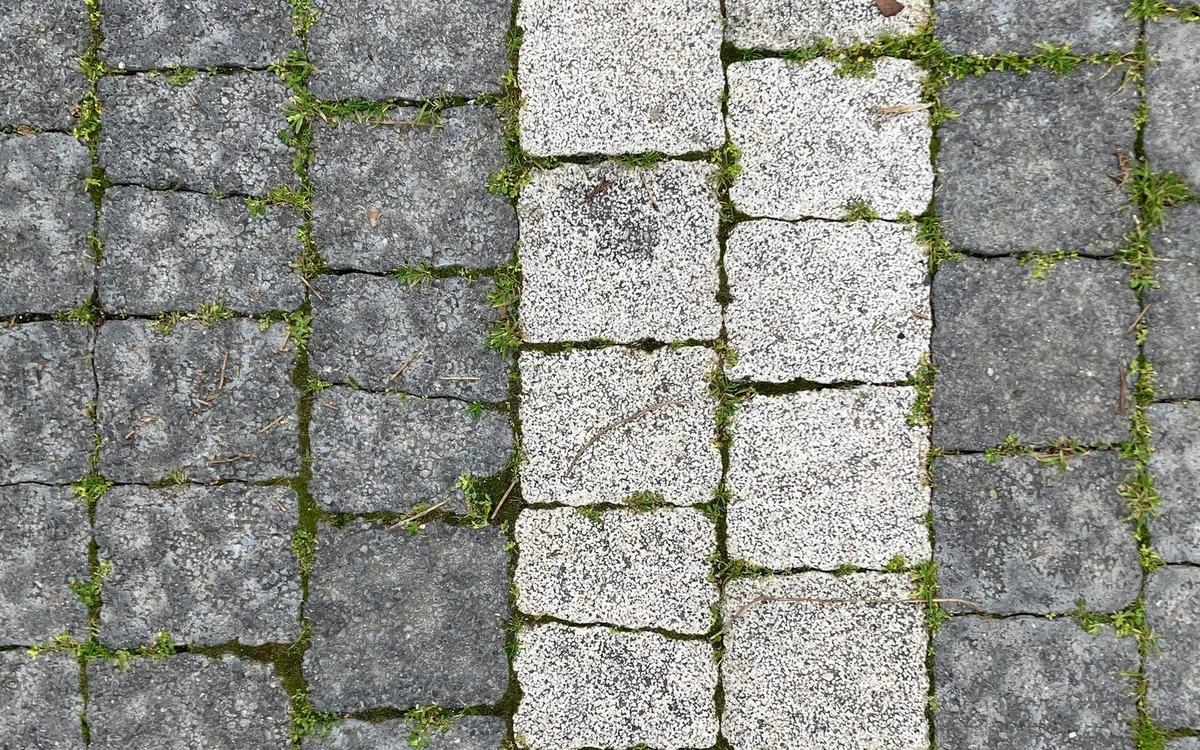
- Weeds and moss in the joints: cleaned out and rejointed properly, which lasts far longer than another season of weedkiller.
- Levels too close to the brickwork: the fix where a patio has crept up towards the damp-proof course, usually a drainage channel or a lowered strip along the wall.
Why Teesside patios fail
Three causes cover most of it. Clay ground holds water, so a thin or missing sub-base softens through a wet winter and the slabs follow it down. Spot bedding leaves voids under the slab, and once frost gets into a void the corner breaks or lifts. And rainwater in the wrong place does slow damage: a downpipe discharging onto the surface, or a gutter overflowing behind a bay window, will undermine a patio corner quietly over a couple of years. Fix the water first, then fix the slabs, or the repair will simply repeat itself.
Repointing without wrecking the stone
Most crumbled joints on older patios around here are the result of a weak dry-brushed sand and cement mix that never had the strength to stay put. Redoing it properly means the joints get cleaned out to a decent depth first, then filled either by hand with the right mortar or with a resin compound matched to the joint width and slab type. It is slow, careful work and it is the difference between a patio that looks tired and one that looks recently laid, at nothing like the cost of a new surface.
Getting it looked at
Describe what you can see, how many slabs are involved and whether water stands anywhere after rain, and add a photo if you have one. That is normally enough for a realistic figure. If the verdict comes back as replacement rather than repair, the cost guide shows what a new surface would run to, and the drainage guide explains what needs to change so the next one does not go the same way.