Garden paths and steps in Teesside
Paths and steps are quoted per job rather than by the square metre, because the labour sits in the levels rather than the area. A side path to the bins, a run of steps up a sloping garden and a route from patio to shed each carry their own setting out, edging and drainage.
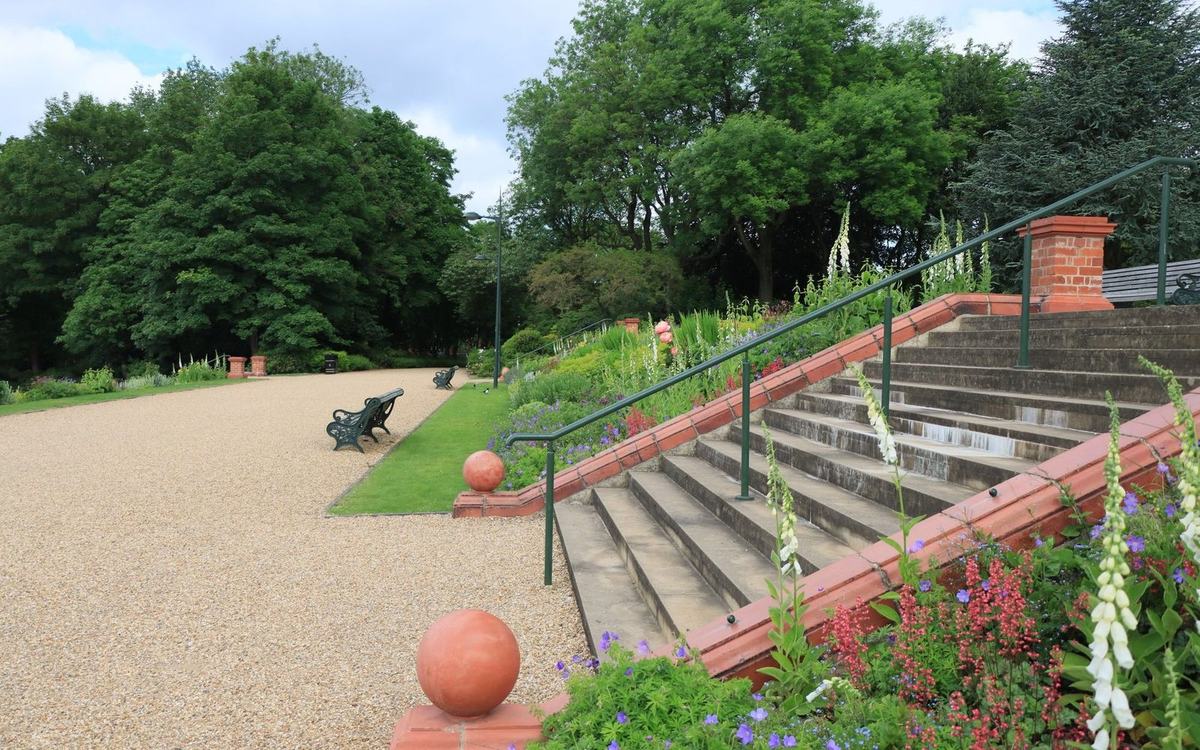
The parts of the garden that get used every day
A patio gets admired, a path gets walked. The route from the back door to the bins, the strip down the side of the house to the front gate, the line across the lawn to the shed or greenhouse: these are the bits of a garden that are used in the dark, in the rain, carrying something heavy. They are also the bits most likely to have been improvised out of odd slabs by a previous owner. Getting them laid properly, level, drained and wide enough to actually walk, changes how a garden works far more than an extra metre of terrace does.
Why paths and steps are priced per job
- Setting out: a curved path or a route round a corner takes far longer to mark, cut and edge than the same area laid as a square.
- Edge restraint: a narrow path needs holding on both sides or it spreads, so haunched edging or a kerb is part of the build rather than an extra.
- Levels: steps mean risers calculated, treads set, and often a small retaining structure at the same time.
- Access: a side alley on a terrace can be too narrow for a barrow, which turns every material movement into hand carrying.
- Drainage: a path beside a house wall has to shed water away from the brickwork, not run it along the base of the wall.
Steps that are safe to use in the dark
The rule that matters on garden steps is consistency. Every riser in a flight should be the same height, ideally somewhere between 100mm and 180mm, with a tread deep enough to take a whole foot, around 300mm or more. People trip on the odd step out, not on steps in general. Outdoor treads want a slight fall so water runs off the nose rather than sitting on it and freezing, a nosing that overhangs a little so the edge reads clearly in poor light, and a surface with a decent grip rating. On the steeper gardens found around Guisborough, Saltburn and the older parts of Ormesby, a flight often works better broken by a small landing than run in one long climb.
Common Teesside path jobs
Side paths on the interwar semis of Linthorpe, Norton and Billingham are the classic one: a metre or so wide, running from a front gate to the back garden, usually needing the gap between the house wall and the boundary fence used efficiently. On the newer estates the request is often a route across the lawn that stops the grass being worn to mud between the patio and a garden office or hot tub. And in walled terraced yards it is a matter of getting the whole surface flat and drained, with a threshold at the back gate that does not flood every time it rains hard.
Getting it quoted
Rough lengths and widths, the number of steps and the height being climbed, plus a note on what the ground is doing, is enough for a sensible price. Where a path or a flight is holding back a bank, garden walls and edging usually comes into the same conversation, and the levels guide covers where the water has to go.